

When Jesus Gets Angry
If you notice what the Scriptures describe as God getting angry, you'll notice it's always about us being like Christ and deeply connected with God. It's never about God's "ego."

I’ve heard plenty of horror stories about parish council meetings.
One priest friend of mine even told me he had heard of someone pulling a pistol out at a parish council meeting and threatening violence when the discussion got heated!
Really, A gun at a parish council meeting?
But, sadly, we humans are notorious for majoring on the minors and missing the real problems of our lives.
We even use anger to stop discussion and hide from our own woundedness and ego problems.
It reminds me of a time on our parish council when there was such an uproar over a project to create more Sunday School space for our growing parish. One side was furious at the other side that this project would take away from storage space for our annual festival. The other side was amazed that their fellow parishioners would prioritize a festival over space for our children’s religious education.
It got pretty heated until I had to step in and ask each of them if they knew why we were a parish in the first place.
What was our purpose? Did they know? Did they even care? The conflict was valuable because it revealed some fundamental weaknesses in our leadership.
Today’s Lesson: Luke 19:45-48
At that time, Jesus entered the temple and began to drive out those who sold, saying to them, “It is written, ‘My house shall be a house of prayer’; but you have made it a den of robbers.” And he was teaching daily in the temple. The chief priests and the scribes and the principal men of the people sought to destroy him; but they did not find anything they could do, for all the people hung upon his words.
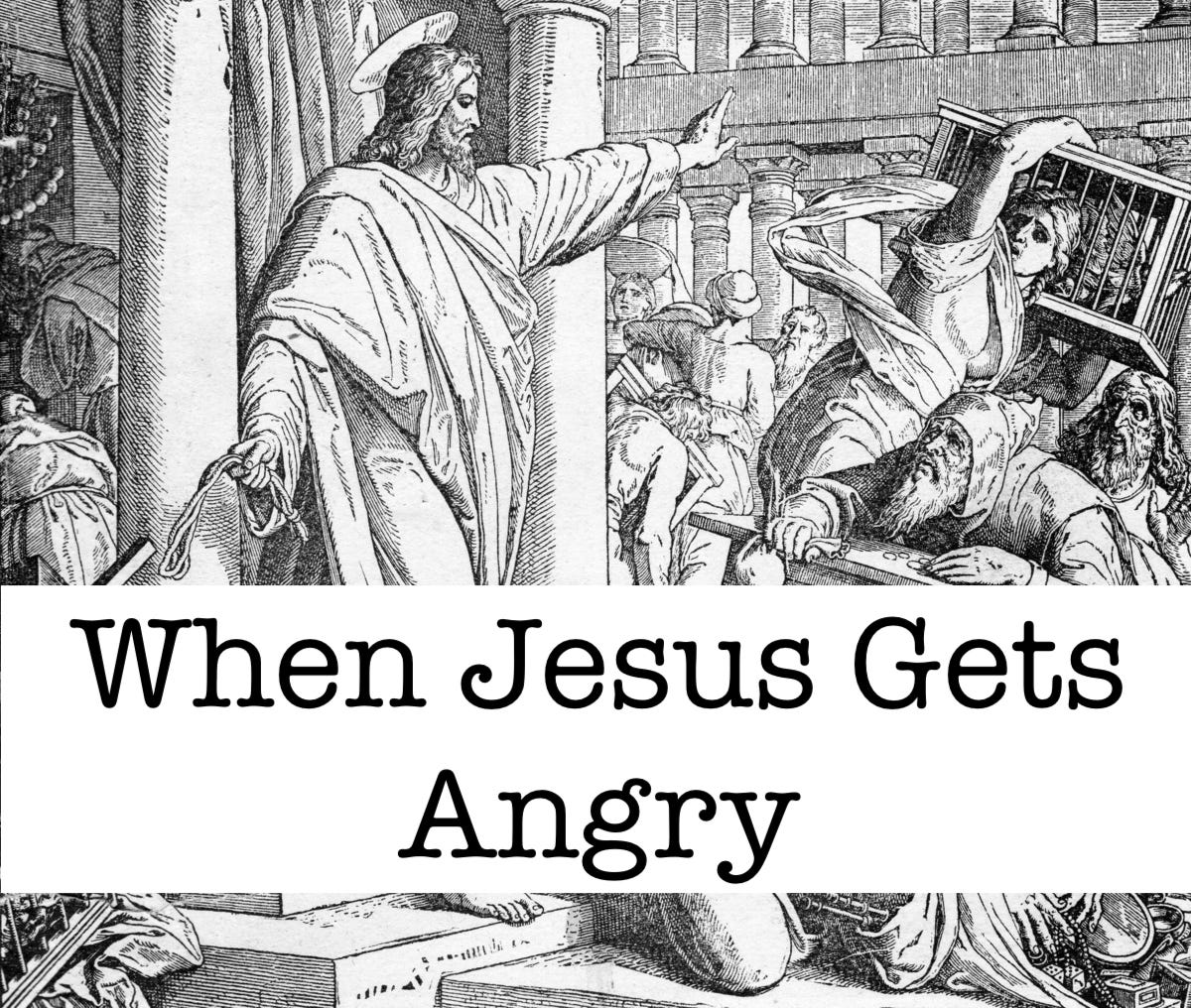
Jesus enters the Temple and immediately starts overturning tables and driving out the merchants.
This isn’t gentle Jesus, meek and mild. This is furious Jesus. Righteous anger. Holy indignation.
Why? Because they turned God’s house of prayer into a marketplace. They replaced worship with commerce. They made the Temple about everything except what it was actually for.
Besides that, these marketeers were set up in the space called “the Court of the Gentiles.” This was a space on the Temple grounds where even Gentiles (non-Jews) could come and be welcomed to learn more about the True God. And these people cared more about their commerce than about being a place where everyone could begin to get close to God!
And Jesus wasn’t having it.
What Can We Take From This?
First, Jesus cares deeply about what happens in God’s house.
“Jesus entered the temple and began to drive out those who sold, saying to them, ‘It is written, “My house shall be a house of prayer”; but you have made it a den of robbers.’”
The Temple was supposed to be a house of prayer. A place where people encountered God. A place of worship, sacrifice, and communion with the Divine.
Instead, it had become a marketplace. The Court of the Gentiles, the only place where non-Jews could come to pray, was filled with merchants selling sacrificial animals and money changers exchanging currency.
Was this commerce necessary? Yes. People needed animals for sacrifice. They needed the right currency for Temple offerings.
But it had taken over. The secondary thing had displaced the primary thing. Commerce had replaced prayer.
And Jesus was furious about it.
Because when God’s house stops being about prayer and worship, it stops being God’s house. It becomes just another building. Just another institution. Just another human organization.
Our churches face the same temptation. We focus on programs, budgets, events, and committees, while forgetting the primary purpose: prayer and worship. Are we a Festival or are we a Church? You can answer that question with a simple test: Which activity gets your best energy?
Next, religious leaders often resist when someone challenges the status quo, even when the status quo is wrong.
“The chief priests and the scribes and the principal men of the people sought to destroy him; but they did not find anything they could do, for all the people hung upon his words.”
Jesus just disrupted their entire operation. He challenged their authority. He exposed their corruption.
And instead of repenting, they sought to destroy Him.
Why? Because they benefited from the status quo. The Temple commerce worked for them. It maintained their power, their income, their position.
Jesus threatened all of that. So they wanted Him gone.
This is the danger of religious leadership divorced from actual love of God. When leaders care more about maintaining their position than pursuing holiness, they’ll resist anyone who challenges them, even if that person is right.
And we see this in churches today. Leaders who resist embracing the Timeless Wisdom of Normal Orthodoxy because it threatens their control. Priests who avoid confrontation because it might reduce their popularity. Parishioners who fight change because they prefer comfort to growth.
The chief priests should have repented when Jesus cleared the Temple. Instead, they plotted to kill Him.
Are you resisting correction because it threatens your comfort? Are you fighting against needed change because you benefit from the way things are?
Finally, people are hungry for truth, even when their leaders aren’t.
“And he was teaching daily in the temple. The chief priests and the scribes and the principal men of the people sought to destroy him; but they did not find anything they could do, for all the people hung upon his words.”
After clearing the Temple, Jesus didn’t leave. He stayed. And He taught. Daily.
And the people hung on His words.
The religious leaders wanted Him gone, but the people wouldn’t let them touch Him because they were starving for truth. Desperate for real teaching. Hungry for someone who actually cared about God instead of just maintaining familiar structures.
This should encourage us. When leaders fail, when institutions become corrupt, when the Church forgets its purpose, there are still people who want truth. Who are hungry for God. Who will recognize authentic teaching when they hear it.
No wonder there is so much controversy about converts entering the Orthodox Church.
But it should also challenge us. Are we those people? When we hear challenging truth, do we hang on it? Or do we reject it because it’s uncomfortable?
The crowds followed Jesus because He spoke with authority and truth. The leaders rejected Him because He threatened their power.
Which one are you?
St. Habakkuk the Prophet
Today we commemorate St. Habakkuk the Prophet, one of the minor prophets of the Old Testament. He lived during a time of corruption in Israel and cried out to God: “How long, O Lord, must I call for help, and you do not listen? Why do you make me look at injustice? Why do you tolerate wrongdoing?”
St. Habakkuk saw the same thing Jesus saw in the Temple: religious corruption, injustice, and people using God’s name while ignoring God’s purposes.
And he didn’t stay silent. He confronted it. He questioned God about it. He demanded answers.
That’s Normal Orthodoxy. Not passive acceptance of corruption. Not silent tolerance of abuse. But holy indignation when God’s house is profaned, and God’s people are exploited.
St. Habakkuk prophesied judgment on those who corrupted worship. Jesus enacted that judgment by cleansing the Temple. Both understood that God cares deeply about what happens in His house and how His people are treated.
Your Response Today
What has displaced prayer in your life?
Maybe it’s not commerce. Perhaps it’s entertainment. Social media. Busyness. Hobbies. Work. Even good things that have taken the place of the primary thing.
Jesus called the Temple “a house of prayer.” What would He call your heart? A house of prayer? Or a den of distractions?
And in your parish, what has displaced worship? Programs? Politics? Personalities? Preferences about how things should be done?
Stop tolerating it. Stop making excuses for it. Stop defending secondary things while the primary thing goes neglected.
Be like Jesus. Clear out whatever has taken the place of prayer. Overturn the tables of distraction. Drive out the merchants of busyness.
Make your heart, and your parish, a house of prayer again.
Because that’s what it’s for. That’s what we’re for. Prayer. Worship. Encounter with God.
Everything else is secondary.
Being Orthodox on Purpose means refusing to let secondary things displace the primary purpose of prayer and worship in your life and in your parish!
P.S. St. Habakkuk the Prophet, you confronted corruption and called God’s people back to righteousness. Intercede with Christ our God that our souls may be saved.
Fr. Barnabas Powell is the parish priest at Sts. Raphael, Nicholas, and Irene Greek Orthodox Church in Cumming, GA. He is also the founder of Faith Encouraged Ministries and produces the Faith Encouraged Daily Devotional on Substack. Watch the Faith Encouraged YouTube Channel here - https://www.youtube.com/@FaithEncouragedTV

Driving out distractions….I have never heard that application of this scripture, and it’s very convicting. As to the rest….thank you. Every day I read your devotions to evaluate my own conscience, for hope and clear thinking about matters of our faith. Good strength, Fr. Barnabas.
House of Prayer
🦁 Holy Prophet Habakkuk, pray for us!
Most Holy Theotokos save us! 🌐⛪☦️🪽
➕IC XC Nika!➕
Onward to Bethlehem......✨🌌🌴🌙